Hot
Laatst toegevoegd

Nieuw / Gebruikte
Gebruikte
Akoestisch / Digitaal
Akoestisch
Jaar van vervaardiging
1996
Breedte
150 cm
Lengte
59 cm
Hoogte
130 cm
Aantal pedalen
3
Aantal toetsen
88
Kleur
Bruin
Uitvoering
Hoogglans
Afwerking
Polyester
Fineer
Mahogany (bright)
natuurlijke sleutellaag
Nee
Garantie maanden
120
Beschrijving
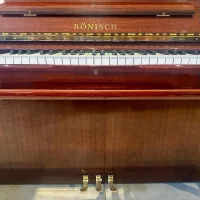
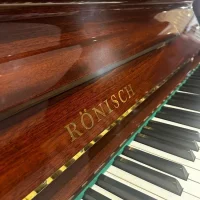
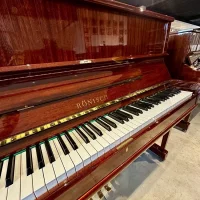
Pre-own upright piano with 10 years warranty. Excellent option. 100% German piano
Rönisch 125K. Rönisch is a historic German piano brand founded in Dresden in 1845 by Carl Rönisch, a pioneer in piano construction and known for technical innovations such as the use of a full cast-iron frame, which allowed higher string tension and greater sound projection. The company became a supplier to several European royal courts and received medals at international exhibitions in the late 19th century.
Origin and brand
Ronisch 125K. Rönisch is a historic German piano brand founded in Dresden in 1845 by Carl Rönisch, a pioneer in piano construction and known for technical innovations such as the use of a full cast-iron frame, which allowed higher string tension and greater sound projection. The company became a supplier to several European royal courts and received medals at international exhibitions in the late 19th century.
After several phases, including the destruction of the original factory during World War II and subsequent production in Leipzig under different organizational structures, the brand was incorporated into Blüthner in 2009. Current production takes place at the Blüthner factory in Leipzig, Germany.
Ronisch 125K. Build quality and general characteristics
Rönisch upright pianos are made using high-quality woods (German pine, European spruce for the soundboard) and Renner actions, one of the high-end industry standards. They use a traditional cast-iron frame, German steel strings, and virgin wool hammers, providing a warm tone, even projection, and a clearly defined touch response.
Typical upright piano models
Among the contemporary models (approximate, according to European catalogs) are:
Rönisch 118K – 118 cm tall. Good balance between size, projection, and touch response.
Rönisch 125K – 125 cm, offering greater resonance and dynamic range than the 118.
Rönisch 132K – 132 cm, providing more tonal body and sound presence.
Piano height affects string length and soundboard area, which translates into greater projection and harmonic richness as the instrument becomes taller.
Tone and practical use
Rönisch uprights tend to offer a balanced voice, with warm bass, well-defined midrange, and clear treble. The touch is consistent, suitable both for serious practice and for accompaniment or small to medium-sized spaces.
Difference compared to other German pianos
When compared with pianos such as Steinway, Bechstein, or Blüthner, Rönisch instruments generally offer genuine German high quality, with traditional craftsmanship and quality control.
Rönisch 125K. Rönisch is a historic German piano brand founded in Dresden in 1845 by Carl Rönisch, a pioneer in piano construction and known for technical innovations such as the use of a full cast-iron frame, which allowed higher string tension and greater sound projection. The company became a supplier to several European royal courts and received medals at international exhibitions in the late 19th century.
Origin and brand
Ronisch 125K. Rönisch is a historic German piano brand founded in Dresden in 1845 by Carl Rönisch, a pioneer in piano construction and known for technical innovations such as the use of a full cast-iron frame, which allowed higher string tension and greater sound projection. The company became a supplier to several European royal courts and received medals at international exhibitions in the late 19th century.
After several phases, including the destruction of the original factory during World War II and subsequent production in Leipzig under different organizational structures, the brand was incorporated into Blüthner in 2009. Current production takes place at the Blüthner factory in Leipzig, Germany.
Ronisch 125K. Build quality and general characteristics
Rönisch upright pianos are made using high-quality woods (German pine, European spruce for the soundboard) and Renner actions, one of the high-end industry standards. They use a traditional cast-iron frame, German steel strings, and virgin wool hammers, providing a warm tone, even projection, and a clearly defined touch response.
Typical upright piano models
Among the contemporary models (approximate, according to European catalogs) are:
Rönisch 118K – 118 cm tall. Good balance between size, projection, and touch response.
Rönisch 125K – 125 cm, offering greater resonance and dynamic range than the 118.
Rönisch 132K – 132 cm, providing more tonal body and sound presence.
Piano height affects string length and soundboard area, which translates into greater projection and harmonic richness as the instrument becomes taller.
Tone and practical use
Rönisch uprights tend to offer a balanced voice, with warm bass, well-defined midrange, and clear treble. The touch is consistent, suitable both for serious practice and for accompaniment or small to medium-sized spaces.
Difference compared to other German pianos
When compared with pianos such as Steinway, Bechstein, or Blüthner, Rönisch instruments generally offer genuine German high quality, with traditional craftsmanship and quality control.
Land
Spanje
Staat/Regio/Provincie
Andalusië
Stad
Benalmádena

Vraag voor meer informatie