Hot


+6
Więcej zdjeć
Marka
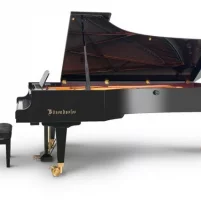
Bosendorfer
Model
290 Imperial
Nowy / Używany
Nowy
Akustyczne / Cyfrowe
Akustyczny
Szerokość
168 cm
Długość
290 cm
Wysokość
102 cm
Liczba pedałów
3
Liczba Klawiszy
88
Kolor
Czarny
Poziom połysku
Wysoki Połysk
Naturalne nakładki
Nie
Opis
Impressive sound, imposing presence
Vienna, 1909
The Italian composer, conductor and pianist Ferruccio Busoni meticulously transcribed the famous organ works of J.S. Bach. He soon realized that additional bass notes were necessary to imitate, in his transcriptions, the immersive sound of 16- to 32-foot organ pipes. Ludwig Bösendorfer accepted the challenge and in 1909 built the first prototype with an eight full-octave tonal range. Not only did Busoni appreciate the exceptional qualities of the — later created — Imperial concert grand, but the great composers Bartók, Debussy and Ravel also composed special works that make use of the enormous resonance of this instrument. These works can therefore only be played and interpreted properly when performed on an Imperial concert grand. Due to its extraordinarily expressive, singing and richly resonant tone, the Imperial grand offers an orchestral timbre. The additional bass notes resonate with every keystroke and the massive soundboard supports the reproduction of every frequency. Ludwig Bösendorfer’s Imperial still represents today the precious heritage of the Bösendorfer factory.
Impressive in sound, imposing in appearance.
Vienna, 1909
The Italian composer, conductor and pianist Ferruccio Busoni meticulously transcribed the famous organ works of J.S. Bach. He soon realized that additional bass notes were necessary to imitate, in his transcriptions, the immersive sound of 16- to 32-foot organ pipes. Ludwig Bösendorfer accepted the challenge and in 1909 built the first prototype with an eight full-octave tonal range. Not only did Busoni appreciate the exceptional qualities of the — later created — Imperial concert grand, but the great composers Bartók, Debussy and Ravel also composed special works that make use of the enormous resonance of this instrument. These works can therefore only be played and interpreted properly when performed on an Imperial concert grand. Due to its extraordinarily expressive, singing and richly resonant tone, the Imperial grand offers an orchestral timbre. The additional bass notes resonate with every keystroke and the massive soundboard supports the reproduction of every frequency. Ludwig Bösendorfer’s Imperial still represents today the precious heritage of the Bösendorfer factory.
Impressive in sound, imposing in appearance.
Państwo
Holandia
Stan/Region/Województwo
Utrecht
Miasto
Veenendaal

Zapytaj o szczegóły