
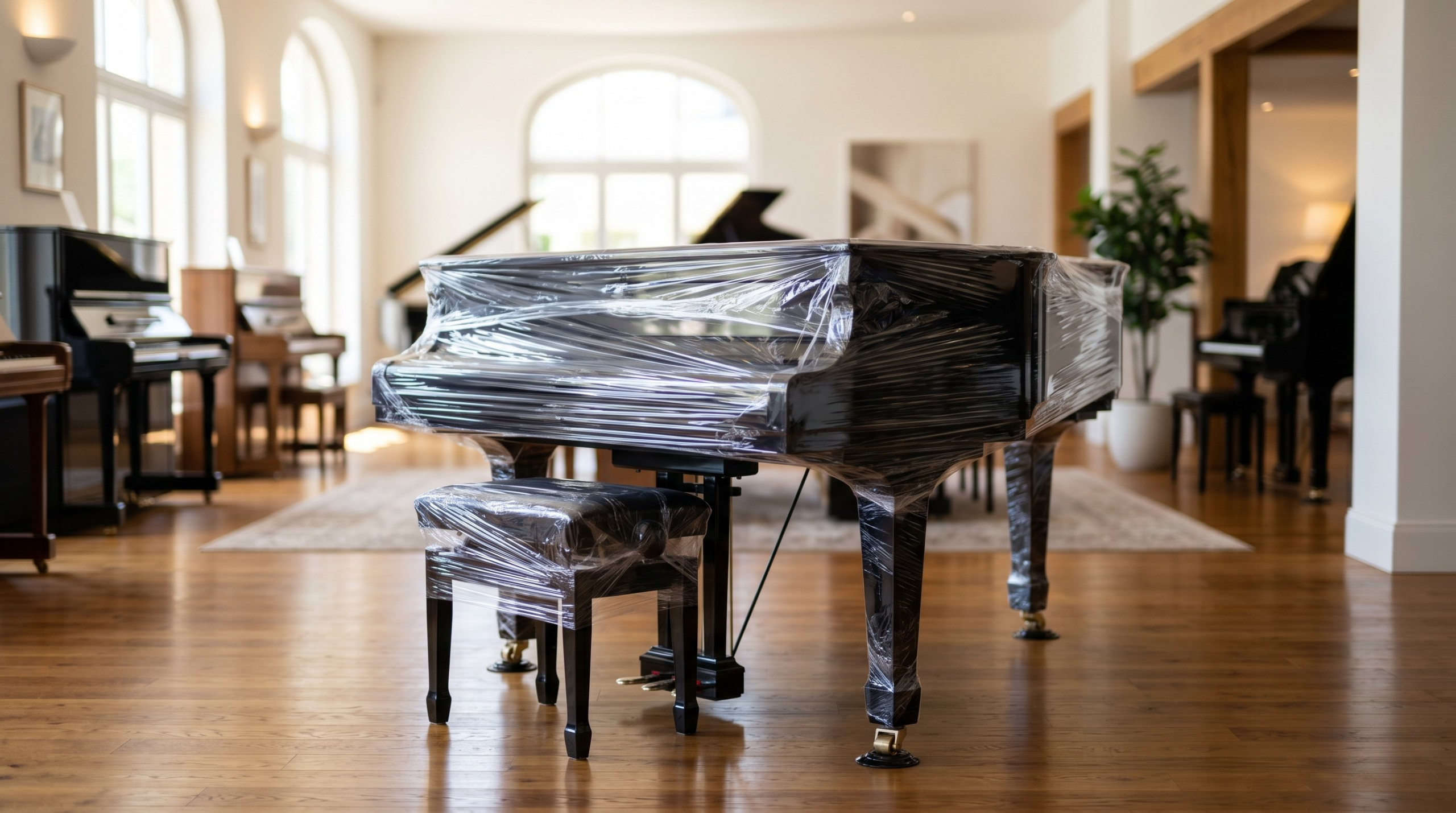

Walk into any showroom and the word “new” gets used loosely. The piano in the corner is new. The one still in its crate in the back is new. The one that’s been on the floor since last spring? Also new, apparently. So before you spend a serious amount of money, it’s worth pinning down one thing — a new piano, what does it mean, exactly? Knowing what that little word actually covers, and why a piano that’s been sitting on display might be the smartest purchase in the room, can save you both money and second-guessing.
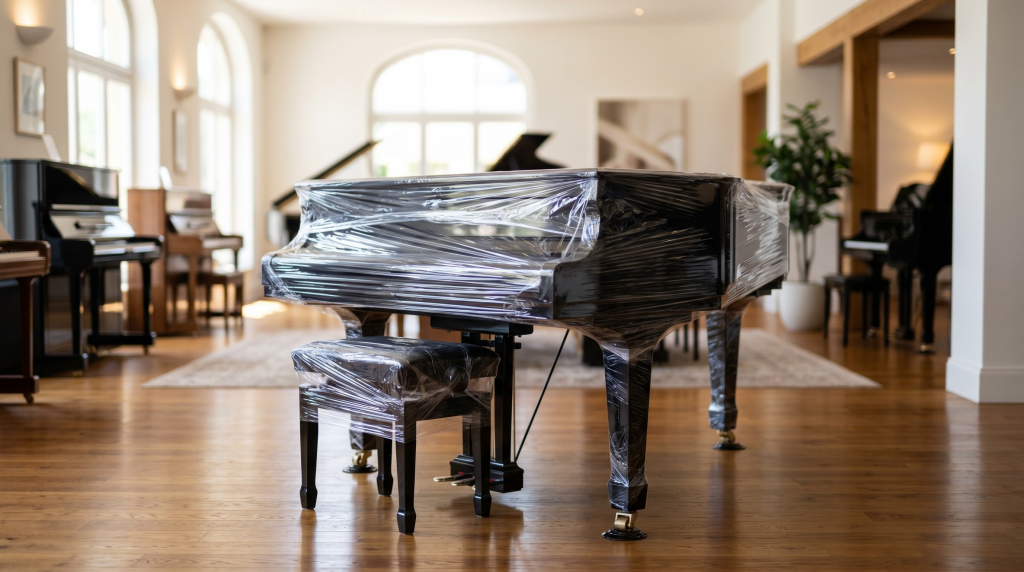
“New” doesn’t mean “Made This Year”
Here’s the part that surprises people. In the piano trade, an instrument is considered new for as long as it has never been sold to an end user. That’s the whole definition. It can sit on a showroom floor for six months, a year, sometimes longer, and it’s still new. Because no one has ever owned it.
So no, “new” does not promise the piano was built this year. A grand might have left the factory eighteen months ago, travelled across a continent, and waited in a showroom before you walked in. Nothing about that makes it used. It only becomes “used” the moment a private owner buys it and later resells.
If the build year genuinely matters to you — for resale value, or just peace of mind — you don’t have to guess. Every acoustic piano carries a serial number, usually stamped on the cast-iron plate inside.
A quick word on warranty, because it’s the real reason this definition matters. A piano that has never been sold to an end user normally comes with the full manufacturer’s warranty. Counted from your purchase, not from the day it was built. That’s the practical line between new and used piano.
The Showroom Model: worn out, or just better prepared?
A showroom model — is simply a new instrument that’s been unpacked and displayed in a piano showroom so customers can play it. And the first worry is always the same: dozens of strangers have sat at this thing. Isn’t it worn out? Almost never. A piano isn’t a pair of shoes. In a decent piano showroom, the foot traffic is low and the playing is gentle — a few minutes here and there, not eight hours a day of hammering. The felt and the action are designed to withstand decades of practice. A season on display barely registers.
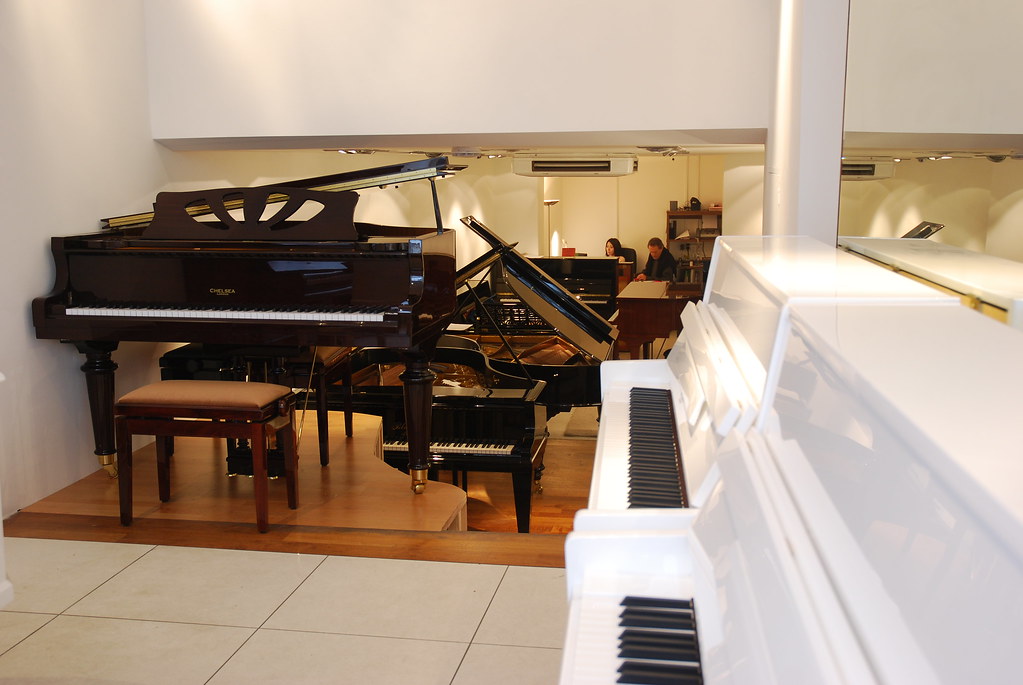
In fact, plenty of technicians will tell you the floor model is the better buy — and they have good reasons.
- It’s settled. Pianos are made of wood, felt and wire — organic, restless materials that shift with temperature and humidity. A “piano fresh” out of a crate is still adjusting to room conditions. One that’s spent months on a showroom floor has already done that settling, which usually means a more stable tuning once it’s in your home.
- It’s been properly prepared. Every piano a dealer puts on display gets uncrated, tuned, regulated and voiced — often several times. All at the dealer’s own expense. A piano bought straight from the box has had none of that. Worse, it might be unpacked by a delivery crew rather than a trained technician.
- You know exactly what you’re getting. No two acoustic pianos are identical, even off the same production line. Buy the floor model and you’re buying the precise touch and tone you’ve already played and liked. Not a sealed box you hope feels the same.
That last point is the one I’d weigh most heavily. With an instrument you’ll keep for twenty or thirty years, “I heard it and loved it” beats “it should be fine” every single time.
Can You pay less for one?
Often, yes — and this is where it gets interesting for anyone shopping carefully. Because a showroom piano has been on display, dealers are frequently open to negotiation in a way they wouldn’t be on a sealed, in-demand model. Discounts in the range of 10% to 20% are common. Especially if the instrument has been on the floor a while or carries a small cosmetic mark. A light scuff on the cabinet that vanishes under normal room lighting.
And if the price won’t move, the extras often will. It’s worth asking for a free bench, a set of quality headphones on a digital piano, or — on an acoustic — a couple of included tunings for the first year. Which you’ll need anyway as the piano acclimatises to your home. One honest caveat: a genuinely sought-after model in short supply may not be discounted at all, and that’s fair enough.
A few related terms worth knowing
Here’s something that confuses buyers more than it should: the same kind of piano goes by several different names. They almost all describe one thing. A brand-new instrument that has been displayed in a showroom but never sold to a private owner. Knowing the variants helps you read listings with confidence, especially across borders.
- Display model — the most universal and frequently used term across the industry. It simply indicates the instrument is being used for demonstration.
- Showroom model — very popular in both the instrument and high-end furniture industries. It implies the piano is part of a curated selection available for immediate trial.
- Ex-display piano — most commonly used in the United Kingdom. In a UK context, these are often featured in “clearance” events to make room for newer stock.
- Floor model — more prevalent in the United States. It specifically refers to the piano currently sitting on the “showroom floor” rather than one remaining in a shipping crate.
- Showroom display piano / showroom display model — natural-sounding, descriptive alternatives, often used to emphasise that the piano has been carefully maintained in a controlled environment.
The practical takeaway: when you see any of these on a listing, you’re looking at the same kind of instrument.
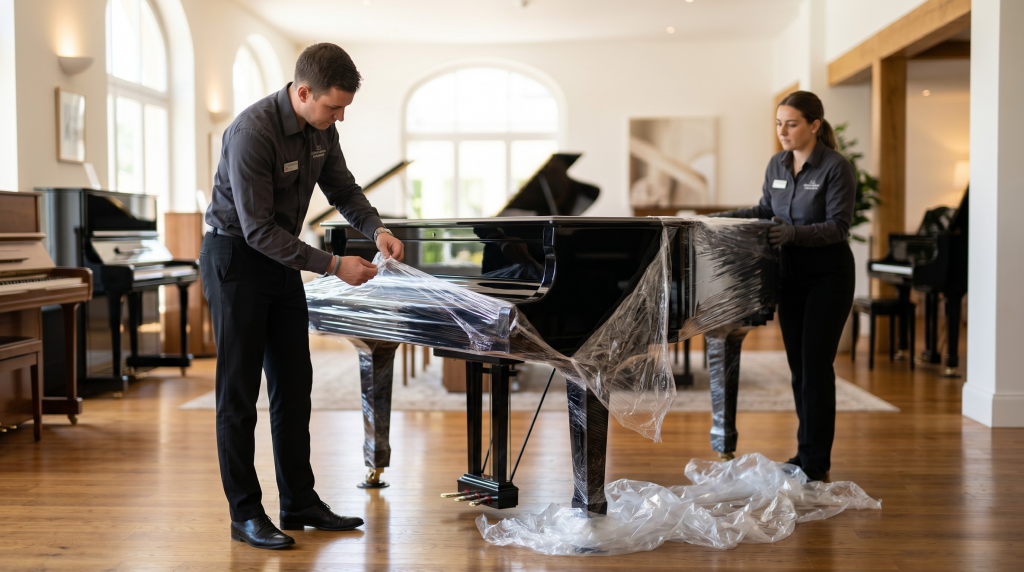
So — Is a Showroom Piano worth it?
For most buyers, yes, and comfortably so. You get an instrument that’s been professionally set up, has settled into stable tuning, and sounds exactly the way you heard it on the piano showroom. Usually for less than the boxed equivalent, and with the same full warranty behind it. The one rule that keeps you safe is the same one that defines “new” in the first place. Confirm the piano has never been sold to an end user, and confirm the manufacturer’s warranty runs from your purchase.
If you’re weighing a specific instrument, every listing on Klaviano shows its make, year and seller. So you can check the serial-number story before you ever pick up the phone.